We are ancient meaning-making beings living in an accelerating world. For thousands of years, we have turned to nature, story, image, ritual, mythology and art to understand existence: to preserve memory, to consider who we are, and to give form to what exceeds explanation. From the camera’s arrival onwards, technology has changed how art is made and how the world is seen. Today, its influence reaches into every area of human life, prompting us to reconsider how we see the world, and what it means to be human.
“The two forces that have done the most to shape who we are as human beings … are technology and revelation.” - Huston Smith, quoted by Bill Viola 2009.
The Space Between, brings together artists whose works hold different ways of seeing, remembering and making meaning. Their practices remain distinct, yet their placement sets questions in motion.
What connects AD-Reflex’s layered train stations, made with Perspex and LED light, to Sarah Ballam’s exquisitely painted bodies of water? In one, movement suspends us between departure and arrival; in the other, water unsettles the boundaries between land and water, certainty and change, the physical and the psychological. Can a place crossed and a body of water both become spaces of passage.
What might Mfundo Mthiyane’s mythic, inward realities share with Daniel Solomon’s landscapes moving between analogue and digital image? What shifts when inner worlds meet landscapes shaped by changing modes of representation?
Nhlanhla Nhlapo’s landscapes hold family memory and ancestry. What kinds of time and memory enter the room alongside transit spaces, shifting water, refracted glass and reassembled technologies?
Simon Venter’s portraits and Anton Smit’s Nubian Heads return us to the face: at once a particular presence and a possible threshold into the self. What changes in the act of looking when the face is encountered in these different ways?
Across the exhibition, landscape carries memory; history enters the present; water unsettles form; mythology gives shape to interior experience; portraiture returns us to the individual; movement challenges permanence; light alters perception; machines begin to resemble organisms; and physical and virtual realities begin to occupy the same space.
Their juxtaposition is deliberate. One work changes the way we encounter another. Relationships emerge between materials, histories, experiences and ideas that may not initially appear connected. Meaning is not prescribed; it is allowed to surface through proximity, association and the act of looking.
-

Mirrored Futures
Two visions, one world: Cassian Robbertze & Paula Anta 2 - 30 Sep 2026 Ours is a plastic present, a plastic future. We are all ‘plastiglomerates’, amalgams of organic and inorganic matter. Knowing this is not only the sum of our demise, but also, wondrously, a means through which to grasp the ever-evolving understanding of what it means to be human – in a... Read more -
Fireflies and Ashes: Seeds beneath the Fire
"The future is not passively inherited, but continually authored through acts of imagination, agency and collective responsibility." 18 Jul - 4 Sep 2026 Fireflies and Ashes: Seeds Beneath the Fire Fireflies and Ashes: Seeds Beneath the Fire brings together eight contemporary African artists whose practices explore memory, inheritance, identity and the continual process of becoming. Opening on 18 July 2026, the exhibition invites viewers to consider how the past is carried into the... Read more -
Latitudes Art fair 2026
The Prose and the Passion 21 - 24 May 2026 Artyli Gallery makes its debut at the Latitudes Art Fair, held at Shepstone Gardens from 22–24 May 2026, following its participation in an international art fair in Miami, USA. Presented in the Manor House, the exhibition brings together a considered group of artists, Raja Oshi, Toni-Ann Ballenden, Asanda Kupa, Talia... Read more -
Rewilding
Re-Wilding explores what becomes possible when control is loosened and relation is restored 21 Mar - 23 Apr 2026 Across sculpture, ceramics, photography, painting, and mixed media, the artists gathered here work with materials that remember. Clay records pressure and touch. Earth, sand, and industrial matter hold time within them. Digital and physical forms blur, reminding us that the systems we construct — technological, cultural, ideological — inevitably remake... Read more -
Holding Isihawu
Black-Owned Galleries 6 Feb - 6 Mar 2026 Holding Isihawu Inspired by the Zulu word for compassion , Holding Isihawu brings together contemporary African artists whose works explore the depth, strength, and humanity of Black life. In a time marked by global uncertainty, the exhibition affirms art as a space of empathy, connection, and restoration. Featuring artists Bambo... Read more -
SALT
Threaded grains of being and connectedness 25 Oct 2025 - 31 Jan 2026 In this exhibition, salt becomes more than substance. It is a metaphor for the pillars of preservation — that of collective culture, memory, and truth. It is the crystallisation of resilience, the nurturing of joy and the disorientation that grief evinces about our aliveness. salt , such as the porosity... Read more -
Becoming
The Journey of Art and the Artist 30 Aug - 10 Oct 2025 In this exhibition, the denotative association of time with Becoming, merges with the arts, to cultivate a cartography for the consciousness of another, held gently in space and expressed through materiality. The arts grant the viewer an opportunity to engage with assemblages of an inner life of someone distant, not... Read more -
Imprints of Elsewhere
The mind as inner atlas of encounter 31 May - 10 Jul 2025 Featuring works by Tania Welgemoed, Frans Thoka, Sue Martin, Fumani Maluleke, Henrico Greyling, and James de Knoop, Imprints of Elsewhere is both intimate and expansive. From haunted urban edges to reimagined materials steeped in ritual and cultural memory, each artist maps their unique vision of existence—rendering the ‘elsewhere’ not as a distant place, but as an ever-present current within. This is art as threshold, as transformation, and as testimony to the fact that what we see is never separate from what we feel, dream, and remember. Read more -
Kindreds in Abstraction
Translations of African Consciousness and Culture 22 Mar - 28 May 2025 This exciting group show brings together a select group of artists who have been pushing the boundaries of abstraction in their practice over the past few years. Abstraction, which first emerged in the late 19th century alongside the discovery of the atom and the invention of the camera, revolutionized art... Read more -
Ubuntu
An exhibition celebrating the ethos of ubuntu - 'I am because we are' 3 - 8 Dec 2024 Artyli Gallery is honoured to present Ubuntu , a captivating exhibition at SCOPE Art Fair in Miami (3-8 December 2024), featuring the works of prominent South African artists Bambo Sibiya, Andrew Ntshabele, and emerging talent Frans Thoka. Each of these three exceptional artists reflects upon the intimate ties between individuals,... Read more -
Resonance
An exhibition reflecting on creative connection 29 Nov 2024 - 28 Feb 2025 As the phenomenon of resonance bridges vibrations into harmony, art fosters meaningful connections that transcend boundaries, offering moments of reflection, healing, and shared humanity. Through the language of form, color, and narrative, there is a gentle reminder of our innate ability to resonate with life, carrying forward the wisdom of... Read more -
Whispers in Matter
An exhibition exploring the liveliness of abstraction 21 Sep - 31 Oct 2024 Through diverse materials and mediums, seven artists delve into their own creative journeys, pushing the boundaries of what art can reveal, conceal, and transform. In their hands, matter becomes a language—a way to express the intangible, a resonance that lingers just beyond reach. The Whispers in Matter exhibition invites you... Read more -
Children of the Dream
Between sepia and bright colour, hope will spring 10 Aug - 19 Sep 2024 Through his unique style of assembling images from historical artifacts, such as books, magazines, letters, and stamps, Ntshabele creates collaged backgrounds for his figurative paintings. This multifaceted approach allows him to engage with both the past and the present, reflecting layers of history and his journey as a young black... Read more -
Winter Collage
Embracing juxtaposing ideas of intuition and intention 12 Jul - 2 Aug 2024 Artyli Gallery welcomes you to experience Winter Collage , a group exhibition showcasing a collection of artworks embodying the bold and energetic, together with the gentle and meditated. Winter Collage allows for one to inquire on how harmony is created in oneself and the environment by weaving of memories, patterns... Read more -
Soil
An exhibition seeking to heal divides and deepen a shared vision of South Africa as a country-place-earth-soil 1 Jun - 9 Jul 2024 The exhibition, Soil opened by the renowned author, academic, and cultural theorist Ashraf Jamal, encompassed a rich tapestry of interpretations through six artists and six unique ways of exploring thematic concerns centered on the notion of 's oil' that will ignite your mind and your imaginations with their unique narratives.... Read more -
See Me Twice
An exhibition inviting conversations between figurative and abstract art 30 Mar - 8 May 2024 Two worlds, two visions. African art has in the last 10 years been defined by portraiture. The entire world was captivated by the uniqueness of our humanity, our personhood and being. Now, we find ourselves needing to be less obviously personal, more immersive. Now, it is also the time of... Read more -
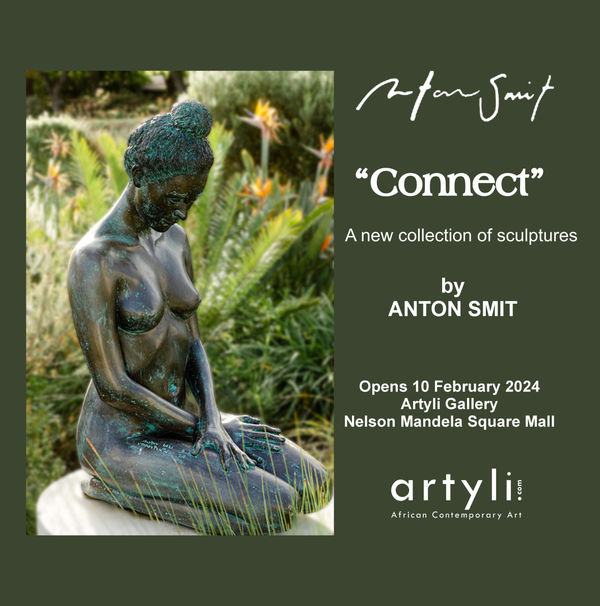
Connect
Sculptures by Anton Smit, featuring works by Toni-Ann Ballenden, Fatima Tayob Moosa, Jo Roets & Andrew Ntshabele 10 - 29 Feb 2024 Anton Smit's latest exhibition, Connect, explores the profound connection between sculptures and the environment, emphasizing how art bridges the gap between human experience and surroundings. Smit's creations go beyond conventional boundaries, providing viewers with a unique perspective on the spaces they inhabit, in both personal and public spaces. Strategically placed... Read more -
Southern Soul
An exhibition foregrounding the vulnerability of the creative endeavour and the duty of the artist called to cultivate social awareness 7 Oct - 7 Dec 2023 The mission of the Southern Soul exhibition is twofold - to first grant space to engage with the artistic process, both intuitive and intentional, and the second to reveal the power that artistic dialogue wields to facilitate the wider public to confront various social ills in a manner that is... Read more -
HerStory
An exhibition centering the feminine voice, of those who identify as women by means of artistic studio practice 19 Aug - 5 Oct 2023 The intuitive and creative undertaking of HERstory is to foster compassion, belonging and the freedom to express through authentic narratives of embodied experience told through the uniting essence of the visual arts. The concept of the exhibition was inspired by a need to bridge those dichotomies of identity that generate... Read more -
Multilayered Memories
An exhibition capturing the distinct style of Andrew Ntshabele that merges archival assemblages of collage and figurative painting, Turbine Art Fair 27 - 30 Jul 2023 To be included in the community archive is to experience an embracing sense of representational belonging. Contrastingly, to be isolated from the archive is to encounter a profound form of violent historical erasure, which in essence is an existence of absence, left unrecognised and ungrieved. The series of works that... Read more -
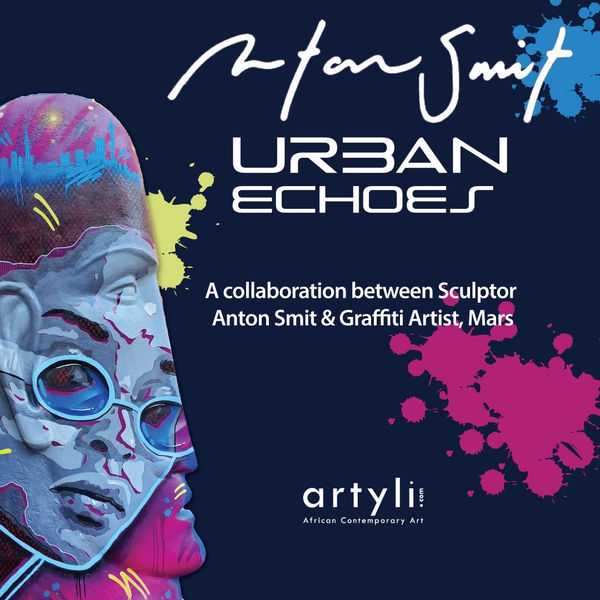
Urban Echoes
An exhibition standing as a testament to the creative resilience that arises from the fusion of diverse artistic expressions 1 - 8 Jul 2023 Read more -
Roots to Wings
An exhibition that embodies the pilgrimage of those trials that constitute artistry 10 Jun - 27 Jul 2023 The group exhibition features an array of exceptionally talented emerging and established artists, such as Andrew Ntshabele, Daniel ‘Stompie’ Selibe, Frans Thoka, Sanusi Olatunji, Restone Maambo, Ludumo Maqabuka, Teboho Makaotsa, Toni Anne Ballenden, Fumani Maluleke, Solomon Omogboye, Morgan Mahape and renowned sculptural artist Anton Smit. The featured artists have utilised... Read more -
Reflecting Forward
An exhibition exploring themes of redemption and renewal 8 Apr - 7 Jun 2023 Reflecting Forward showcases works by Andrew Ntshabele and Morgan Mahape and it will introduce works by Restone Maambo and Fathema Bemath. The artworks selected for this current exhibition are a variety of representations of the human figure, both two-dimensional and three-dimensional. Each artist has found an individual way to use... Read more -
African Alchemy
An exhibition combining “traditional” concepts of art with alternative found objects 4 - 28 Mar 2023 Although art is often seen as something that is traditionally made from mediums like paint, ink, charcoal and marble, the ability to see the potential in what surrounds us has been a skill that human beings have had since the first time they picked up a shell and made a... Read more -
Streams of Dreams
An exhibition of the artistic process created from different ideas and dreams 14 Dec 2022 - 28 Feb 2023 Streams of Dreams is an exhibition showcasing the talent and achievement of some of the artists represented by Artyli Gallery. This includes works by well-known South African artists such as Andrew Ntshabele, Bambo Sibiya, Mariapaola Mcgurk, Toni-Anne Ballenden and Daniel Stompie Selibe. Each of these artists has a unique way... Read more -
Earthsong
An exhibition considering the conscious relationship with nature and our need to preserve it 5 Nov - 12 Dec 2022 We live in a time when human beings are becoming more and more conscious of our relationship with nature and our need to preserve it, one of the ways that we can reflect on this relationship is through the medium of art. We do this either by making the artworks... Read more -
Vivid Identity
An exhibition showcasing diverse approaches to the representation of portraiture 13 Aug - 3 Oct 2022 Artyli Gallery is excited to present their latest group exhibition Vivid Identity , which opens in conjunction with Anton Smits new exhibition Colossal . Vivid Identity is an exhibition of contemporary figurative portraiture, which embraces this African movement through the unique expressions of ten different artists. This vibrant and exquisite... Read more -
Colossal
An exhibition intertwining sculpture and poetry in collaboration with Anton Smit 13 Aug - 31 Oct 2022 Read more